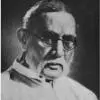
Jaipur-Atrauli
Introduction
The Jaipur-Atrauli gharana is a distinguished Hindustani classical music school founded by Ustad Alladiya Khan (1855-1946) in the late 19th century. The gharana's hyphenated name reflects its geographical origins: the family hailed from Atrauli village near Aligarh in Uttar Pradesh and later migrated to Jaipur, Rajasthan, where they served in the court of the Maharaja of Jaipur, their principal patron. This gharana primarily evolved from the Dagar-bani of Dhrupad while absorbing the finer essences of Gauhar-bani and Khandar-bani, creating a unique synthesis of dhrupad-dhamar traditions with Vocal improvisation.
Alladiya Khan's transformative contribution to Hindustani classical music emerged from personal adversity. Due to vocal strain from overextension at his patron's request, he lost his voice in his late thirties for nearly two years. These limitations resulted in the conception of what would become the Jaipur gayaki—a new style that contained almost nothing of the alap-pradhan, slow-tempo dhrupad features, but was heavily interspersed with mid-tempo, intricate taan-patterns and gamaks. These distinctive taan patterns, designed like mathematical constructs with geometric precision, became the hallmark of his style and ultimately of the Jaipur-Atrauli gharana.
The gharana acquired its status as a major musical school in the early 20th century through the growing popularity of legendary exponents including Kesarbai Kerkar, Mogubai Kurdikar, and Mallikarjun Mansur. Later generations produced equally acclaimed musicians such as Kishori Amonkar, Dhondutai Kulkarni, Shruti Sadolikar, Laxmibai Jadhav, and Ashwini Bhide-Deshpande. The Jaipur-Atrauli tradition is particularly renowned for its mastery of rare and compound ragas, with signature ragas including Sampoorna Malkauns, Basanti Kedar, Basant Bahar, Bihagda, Khat, Gandhari, and Nat Kamod.
Institutions such as the ITC Sangeet Research Academy have played a vital role in preserving this gharana's legacy through archival work and educational programs. The Academy's audio archives have digitized historical recordings of gharana stalwarts like Kesarbai Kerkar and Kishori Amonkar, ensuring accessibility for future generations. Today, the Jaipur-Atrauli gharana continues to be celebrated for its scholarly approach to raga architecture, complex rhythmic play, and the intellectual rigor it brings to Hindustani classical music.