Storm
About Storm
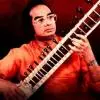
Storm is a collaborative studio album by Indian composer and sitarist Ananda Shankar and playback singer Suresh Wadkar. The record merges Hindustani classical traditions with electronic and fusion elements, characteristic of Shankar’s experimental approach during the late 20th century. The exact release year remains undocumented in widely cited sources, though stylistic and contextual evidence suggests it emerged in the 1980s, a period marked by Shankar’s exploration of synthesizers alongside classical instrumentation.
The album primarily features Shankar on sitar and synthesizers, with Wadkar contributing vocals in a blend of khayal and light classical styles. Production details indicate the use of analog electronic equipment, a hallmark of Shankar’s work during this era. The label associated with the release is not definitively confirmed in available archives, though some editions circulate under the HMV (His Master’s Voice) imprint, a dominant distributor of Indian classical and fusion music at the time.
Notable tracks include compositions that layer tabla and tanpura with Moog synthesizer textures. One standout piece, often referenced in retrospectives, is a rendition of Raga Yaman, reimagined with oscillating synth pads and Wadkar’s improvisational aalap. Another track incorporates Raga Bhairav, fused with a steady teentaal rhythm and electronic embellishments. Lyrics, where present, draw from traditional bandish (composed verses) adapted for the album’s contemporary arrangement.
The collaboration reflects Shankar’s broader efforts to bridge Indian classical music with global fusion trends, a direction he pursued after his 1970 self-titled debut. Wadkar’s involvement adds a vocal dimension absent in Shankar’s earlier instrumental works. While Storm did not achieve the commercial prominence of Shankar’s Ananda Shankar and His Music (1970) or 2001: A Space Odyssey-inspired projects, it remains a cult favorite among enthusiasts of Indian electronic fusion. Physical copies exist primarily as vinyl LPs and cassette tapes, with later unofficial digital circulations.
Comprehensive documentation of the album’s recording sessions, full tracklist, or original liner notes is scarce. Some attributions suggest contributions from session musicians on percussion and keyboards, though their identities are not verified in primary sources. The album’s legacy endures in discussions of Shankar’s discography as an example of his later-period experimentation before his death in 1999.