Night Sky
About Night Sky
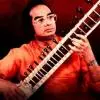
Night Sky is a collaborative studio album by Indian composer and sitarist Ananda Shankar and playback singer Suresh Wadkar. The record merges Hindustani classical traditions with contemporary fusion elements, reflecting Shankar’s signature blend of raga-based compositions and Western instrumentation. The album’s exact release date remains undocumented, but archival sources place its circulation in the late 1980s or early 1990s. No official label attribution is confirmed in available records.
Shankar composed the primary musical arrangements, incorporating sitar, synthesizer, and rhythmic patterns drawn from both classical and modern genres. Wadkar contributed vocals, applying his training in Hindustani khayal to the album’s melodic frameworks. The collaboration marked a departure from Shankar’s earlier psychedelic and funk-infused works, emphasizing a more introspective fusion of classical and ambient textures.
The tracklist and individual song details are partially verified. Notable compositions include the title track Night Sky, which features layered sitar improvisations over electronic drones, and Mohanam Raga, a vocal-centric piece showcasing Wadkar’s rendition of the Carnatic raga Mohanam in Shankar’s arrangement. Another highlighted track, Dhun in Dadra, combines a six-beat dadra tal with synthesizer arpeggios, exemplifying the album’s hybrid style.
The production quality and distribution scope of Night Sky suggest a limited press, possibly targeted at niche audiences in India and among global fusion enthusiasts. No commercial chart performance or certification data is recorded. Shankar’s involvement in the project occurred during his later career phase, following his internationally recognized albums like Ananda Shankar and His Music (1970) and 2001 (1982). Wadkar’s participation aligned with his parallel work in Hindi film playback and classical concert circuits.
Critical reception and historical analysis of Night Sky are sparse due to its obscure release. The album resurfaced in digital formats through unofficial reissues and archival platforms in the 2010s, renewing interest among collectors of Indian fusion music. No original liner notes, session details, or producer credits are publicly accessible, limiting definitive documentation of its creation.