Anjali
About Anjali
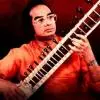
Anjali is a collaborative studio album by Indian composer and sitarist Ananda Shankar and playback singer Suresh Wadkar. The record merges elements of Hindustani classical music with contemporary arrangements, reflecting Shankar’s signature fusion of traditional raga structures and Western instrumentation. The exact release date remains undocumented, but the album emerged in the late 1980s or early 1990s under an unspecified label.
Shankar composed the music and performed on sitar, synthesizers, and other instruments, while Wadkar provided lead vocals. The album features devotional and semi-classical tracks, with lyrics drawn from Hindu bhajans and poetic traditions. Notable compositions include a rendition of Hey Ram Hey Ram, a bhajan adapted with Shankar’s orchestral and electronic textures. Another highlight is Shiv Tandav Stotram, where Wadkar’s vocal delivery aligns with Shankar’s dynamic rhythmic patterns and layered synth arrangements.
The production incorporates acoustic and electronic elements, including tabla, guitar, and drum machines. Shankar’s use of Moog synthesizers and electric sitar creates a distinct sonic blend, while Wadkar’s trained classical voice anchors the melodic framework. The album’s title, Anjali (Sanskrit for \"offering\"), reflects its devotional themes and the artists’ intent to bridge sacred and modern musical forms.
Critical reception and commercial performance details for Anjali are not widely recorded. The album contributes to Shankar’s discography of experimental fusion works, following his earlier releases like Ananda Shankar and His Music (1970) and 2001 (1984). Wadkar’s collaboration marks one of his few non-film projects during this period, showcasing his versatility beyond Bollywood playback singing. The original release format included vinyl and cassette, with later reissues possibly appearing on CD in regional markets.
No official tracklist or session documentation exists in public archives. The album’s legacy persists among enthusiasts of Indo-Western fusion, though it remains less studied than Shankar’s earlier or more commercially successful works. The partnership between Shankar and Wadkar did not yield further recorded projects.