 Release Group

Recent Releases
View allTracklist (Primary Release)
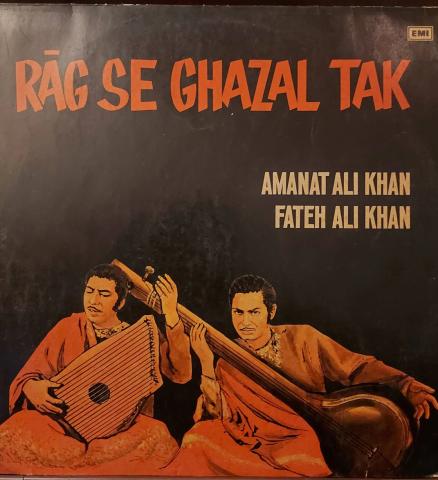
About Raag Se Ghazal Tak
Raag Se Ghazal Tak is a classical and semi-classical music release by Pakistani vocalist Amanat Ali Khan. The album presents a fusion of traditional raag-based compositions with ghazals and light classical forms, showcasing Khan’s mastery of the Patiala gharana style. The release date remains undocumented in available sources, but the work aligns with Khan’s active period in the late 20th century.
The album adopts a structured format where each raag serves as the foundation for three distinct tracks: a bandish (classical composition), a thumri (semi-classical song), and a ghazal (Urdu poetic form). The primary label or production house is not specified in accessible records. The tracklist spans six recordings, divided equally between Raag Yaman and Raag Malkauns.
In Raag Yaman, Khan performs Bandish-Tarana: Piya Ghar Aye, a rhythmic exploration of the raag’s melodic framework. This is followed by Thumri: Aaja Aaja Na Ja Pardes, a semi-classical piece emphasizing emotional phrasing and folk-inflected cadences. The segment concludes with Ghazal: Meri Dastan-e-Hasrat, a lyrical interpretation blending Persian poetic conventions with the raag’s scale.
The Raag Malkauns segment begins with Bandish: Dhum Dhum Wa, a composition highlighting the raag’s pentatonic depth and Khan’s vocal agility. The subsequent Thumri: Kab Aaoge Tum Aaoge employs a slower tempo and ornamental embellishments characteristic of the form. The final track, Ghazal: Kaise Guzar Gai Hai Jawani, merges the raag’s somber tonality with ghazal’s thematic focus on longing and temporal reflection.
The album exemplifies Khan’s ability to bridge classical rigor with accessible poetic expression. While commercial reception details are unverified, the work holds significance in the discourse on South Asian vocal traditions and their adaptation in recorded formats. Additional metadata, including session musicians or recording locations, is not publicly confirmed.