Raga Malkauns: Bandish - Dhum Dhum Wa
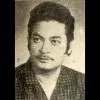
About Raga Malkauns: Bandish - Dhum Dhum Wa
\"Raga Malkauns: Bandish – Dhum Dhum Wa\" is a khayal performance in the raga Malkauns tradition of Hindustani classical music. Vocalist Amanat Ali Khan rendered this composition in a live or studio setting, though the exact recording date and venue remain undocumented. The track spans 13 minutes and 19 seconds, adhering to the slow, meditative vilambit and faster drut sections characteristic of classical bandish presentations.
The composition centers on the bandish (fixed melodic phrase) \"Dhum Dhum Wa,\" a text traditionally associated with raga Malkauns. Khan’s interpretation employs the khayal gayaki style, emphasizing improvisational taans (melodic runs) and bol-banao (lyrical embellishment). The raga’s pentatonic scale (audav-audav jati)—omitting the second and sixth notes—forms the melodic foundation, while the performance likely incorporates tanpura drone and tabla accompaniment, though specific instrumentalists are uncredited in available sources.
The recording circulates as an independent track or within compilations of Khan’s work, but no official album title, release year, or label attribution is confirmed. Amanat Ali Khan (1932–1974), a prominent exponent of the Patiala gharana, was known for his command over raga Malkauns, and this rendition exemplifies his signature blend of technical precision and emotional depth. The track’s structure follows classical conventions, beginning with a measured alaap (unmetered introduction) before transitioning into the composed bandish and culminating in layered improvisations.
Notable aspects include the use of gamak (ornamentation) on the komal dhaivat (flattened sixth note) and the raga’s evocative association with late-night performances. While the recording’s provenance lacks detailed documentation, it remains a referenced example of Khan’s contributions to 20th-century Hindustani vocal music. No commercial release metadata, liner notes, or alternate versions are verified in public records.