Raag Yaman: Bandish-Tarana - Piya Ghar Aye
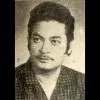
About Raag Yaman: Bandish-Tarana - Piya Ghar Aye
\"Raag Yaman: Bandish-Tarana – Piya Ghar Aye\" is a classical vocal performance by Amanat Ali Khan, a prominent exponent of the Patiala gharana in Hindustani classical music. Released in an unspecified year, the recording spans 11 minutes and 42 seconds and centers on Raag Yaman, a foundational evening raga in the North Indian classical tradition. The composition blends a bandish (a fixed melodic framework with lyrics) and a tarana (a vocal form using rhythmic syllables like odani or nom tom), structured around the thematic phrase \"Piya Ghar Aye\" (transl. \"Beloved, come home\").
Amanat Ali Khan employs the khayal style, characterized by improvisational alaap and intricate taan patterns, while adhering to the grammatical rules of Raag Yaman. The performance likely features accompaniment by tabla and tanpura, though specific instrumentalists and the recording label remain undocumented in available sources. The track exemplifies the artist’s command over layakari (rhythmic play) and gamak (ornamentation), hallmarks of the Patiala gharana’s expressive vocabulary.
The work’s release format—whether as part of a studio album, live concert recording, or compilation—is not explicitly confirmed. Amanat Ali Khan’s renditions of Raag Yaman often serve as pedagogical references for students of the gharana, emphasizing the raga’s shuddha madhyam (pure fourth) and gandhar (third) swaras. The phrase \"Piya Ghar Aye\" aligns with conventional bandish themes of longing and devotion, while the tarana section showcases the artist’s agility in navigating the raga’s ascending (arohana) and descending (avrohana) scales.
No commercial release date, producer credits, or associated album artwork are verified in public records. The track’s reception and historical context within Amanat Ali Khan’s discography also lack detailed documentation. Listeners and scholars frequently cite this performance as representative of the late 20th-century evolution of khayal singing, particularly in its fusion of lyrical and abstract vocal techniques.