Jungle King
About Jungle King
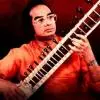
Jungle King is a composition by Indian musician Ananda Shankar, released as part of his self-titled debut album in 1970. The track blends traditional Indian classical instruments with Western psychedelic rock and funk, exemplifying Shankar’s fusion of sitar-driven raga structures and contemporary electric arrangements. The album appeared on the Reprise Records label in the United States and World Pacific Records in other regions.
The recording features Shankar on sitar and electric sitar, accompanied by a band that included session musicians on guitar, bass, drums, and tabla. The track runs for 3 minutes and 43 seconds. Its rhythmic foundation combines a steady funk groove with improvisational sitar passages, while the arrangement incorporates Moog synthesizer effects, a hallmark of Shankar’s experimental approach during this period. The composition’s title reflects its thematic fusion of Eastern and Western sonic landscapes, though no explicit lyrical or narrative context is documented.
Ananda Shankar produced the album in collaboration with engineer Amir Khusrow (credits unverified in some sources), with sessions likely recorded in Los Angeles. The track’s reception contributed to the album’s cult status among fans of psychedelic and world fusion music, though commercial performance data from the era remains limited. Jungle King was later reissued on compilation albums and digital platforms, sustaining its influence in global fusion and electronic music circles.
Notable for its time, the track predated wider crossover experiments between Indian classical music and Western genres by artists such as Ravi Shankar (Ananda’s uncle) and The Beatles. The original 1970 LP release included liner notes describing the fusion concept, but no standalone single for Jungle King is confirmed. Subsequent re-releases, including the 1996 CD edition by Blue Moon Records, preserved the track in its original form.
Contextual details about the recording process, specific session dates, or individual musician contributions beyond Shankar are incomplete in available sources. The track’s legacy endures through its inclusion in retrospectives on 1970s fusion music and its sampling in later electronic and hip-hop productions.