Baba
About Baba
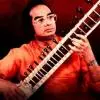
Baba is a composition by Indian musician Ananda Shankar, released as part of his self-titled debut album in 1970. The track spans 2 minutes and 29 seconds and exemplifies Shankar’s fusion of traditional Indian classical music with Western psychedelic rock and funk elements. The album marked a departure from conventional Indian classical presentations by incorporating electric sitar, Moog synthesizer, and rhythmic patterns drawn from both Hindustani music and contemporary Western genres.
Ananda Shankar produced the album under the label Reprise Records, a subsidiary of Warner Bros. Records. The recording sessions took place in London, where Shankar collaborated with session musicians to blend Indian raga structures with rock instrumentation. Baba features prominent use of the sitar alongside drum kits, bass guitar, and synthesizer layers, creating a hybrid sound that appealed to international audiences during the late 1960s and early 1970s counterculture movement.
The track’s title translates to \"father\" in Hindi and Bengali, though the lyrical or thematic context remains undocumented in available sources. The composition follows a cyclical melodic pattern typical of Indian classical music but accelerates into a groove-oriented arrangement with improvisational segments. Shankar’s adaptation of raga scales into a shorter, accessible format contributed to the album’s crossover success in Western markets.
Critics and historians often cite the 1970 album as a foundational work in the Indo-jazz fusion genre, with Baba serving as a standout example of Shankar’s innovative approach. The original vinyl release included the track as part of a larger collection that also featured pieces like Sagar (The Ocean) and Raghupati. Later reissues and compilations, such as the 1996 CD remaster by Real World Records, preserved the track’s place in Shankar’s discography.
Limited documentation exists regarding the specific recording dates or personnel for Baba, though Shankar’s role as the primary composer and sitarist is confirmed. The track’s enduring influence is evident in its sampling by hip-hop and electronic artists in subsequent decades, including its use in the 1997 song Put Your Hands Where My Eyes Could See by Busta Rhymes. The original 1970 album remains a reference point for studies of cross-cultural musical synthesis in the 20th century.