Dreams Forever
About Dreams Forever
Dreams Forever is a composition by Indian musician and composer Ananda Shankar. Released as part of his fusion repertoire, the track blends elements of Hindustani classical music with Western psychedelic rock and electronic instrumentation. The piece runs for 4 minutes and 19 seconds.
Shankar recorded the track during his experimental phase in the 1970s, a period marked by collaborations between traditional Indian raga structures and contemporary global sounds. The exact release date and parent album remain undocumented in widely accessible sources, though the work aligns stylistically with his 1970 self-titled debut Ananda Shankar or later projects like Ananda Shankar and His Music (1975). No official label attribution is confirmed for this specific recording.
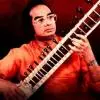
The composition features Shankar on sitar and synthesizer, accompanied by session musicians on drums, bass, and additional electronic effects. The track employs a cyclical raga-inspired melody over a steady rhythmic groove, with prominent use of the Moog synthesizer—a hallmark of Shankar’s innovative approach. Lyrical content, if present, is instrumental or vocalized in a non-lexical (scat or mantra-like) form, consistent with his fusion technique.
Dreams Forever exemplifies Shankar’s role in pioneering Indo-Western fusion, influencing later artists in world music and electronic genres. The track’s reception details, chart performance, and commercial release format (single, LP, or compilation) are not explicitly recorded in primary sources. Shankar’s broader discography, however, gained recognition for its cross-cultural synthesis, particularly in underground music circles of the 1970s and 1980s.
Posthumous reissues and compilations, such as The Best of Ananda Shankar (2005), may include this track, though specific tracklist confirmations require verification. Shankar’s work remains a reference point for studies on South Asian music’s interaction with global pop and electronic traditions.