Anjali
About Anjali
Anjali is a composition by Indian musician Ananda Shankar, featured in his fusion of classical Indian music with Western rock and psychedelic elements. The track appears on his self-titled debut album, released in 1970 under the label Reprise Records in the United States. The album marked a departure from traditional Indian classical presentations by incorporating sitar-driven melodies alongside electric guitars, synthesizers and rhythmic patterns influenced by funk and jazz.
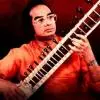
The track Anjali runs for 6 minutes and 1 second. Shankar performs the sitar as the lead instrument, accompanied by a band that includes electric bass, drums, and keyboard arrangements. The composition blends raga-based improvisation with structured Western harmonic progressions, reflecting Shankar’s training under his uncle, sitarist Ravi Shankar, and his exposure to contemporary Western music during his time in Los Angeles. The album’s production involved collaboration with American session musicians, though specific personnel credits for this track remain partially undocumented in primary sources.
The debut album received attention for its experimental fusion approach, predating the broader global popularity of world music crossovers in the 1970s. While Anjali was not released as a single, the album’s reception contributed to Shankar’s reputation as a pioneer in Indo-Western musical synthesis. Later reissues of the album, including a 1996 CD release by EMI, preserved the original tracklist without alternations. The composition’s title translates to \"offering\" in Sanskrit, aligning with the album’s thematic exploration of cultural and sonic exchange.
No official music video or live performance recordings of Anjali from the 1970 era are verified in archival sources. Shankar’s subsequent works, such as Ananda Shankar and His Music (1975), further developed the fusion style introduced on this album. The original 1970 release is now considered a collector’s item, with vinyl pressings occasionally appearing in specialty markets. The track’s legacy endures in retrospectives on psychedelic rock and the evolution of global fusion genres.