Almora
About Almora
Almora is a composition by Indian musician Ananda Shankar, released as part of his fusion repertoire. The track spans 3 minutes and 23 seconds and exemplifies Shankar’s blend of traditional Indian classical instrumentation with Western psychedelic and funk elements. The recording date and original release format remain undocumented in available sources, though the piece aligns with Shankar’s 1970s output, a period marked by his experimentation in cross-genre collaboration.
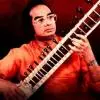
Shankar composed Almora using the sitar as the primary melodic instrument, layered with electric guitars, synthesizers and rhythmic patterns drawn from both Hindustani and Western pop traditions. The track’s title references Almora, a district in the Indian state of Uttarakhand, though the direct connection between the location and the musical content is not explicitly detailed in surviving records. The composition’s structure follows a cyclical progression, with improvisational passages interspersed between fixed thematic sections.
The piece first appeared on a compilation or album reissue, but the exact parent release is unverified in authoritative discographies. Shankar’s label associations during this era included Reprise Records and EMI India, though neither is confirmed for this specific track. Almora shares stylistic affinities with Shankar’s 1970 album Ananda Shankar and His Music, which featured similar fusion techniques, but its inclusion on that record is not corroborated.
Notable aspects of the track include its use of tala-based percussion alongside a backbeat, a hallmark of Shankar’s approach to bridging Eastern and Western rhythms. The sitar lines employ meend (glissando) and gamak (ornamentation) techniques, while the harmonic foundation incorporates minor-key modalities common in psychedelic rock. Live performances of Almora are not widely documented, and no official music video or visual accompaniment exists for the recording.
Critical reception of Almora is sparse due to limited historical documentation, but the track is cited by scholars of Indian fusion music as an example of Shankar’s innovative synthesis of disparate musical languages. The composition’s legacy persists in retrospective anthologies of 1970s Indian psychedelia, though its commercial impact at the time of release remains unquantified.