Almora
About Almora
Almora is a studio album by Indian musician Ananda Shankar, released in 1975. The record blends traditional Indian classical instruments with Western psychedelic rock, funk and electronic elements, continuing Shankar’s exploration of fusion music that began with his 1970 self-titled debut. The album was issued on vinyl by EMI India and later reissued in digital and CD formats by various labels, including Finders Keepers Records in 2005.
The album features Shankar on sitar and Moog synthesizer, accompanied by a rotating ensemble of session musicians. The lineup includes Ustad Allah Rakha on tabla for select tracks, though full personnel credits remain partially undocumented. The production incorporates layered arrangements, with prominent use of fuzz guitar, drum breaks and analog synthesis to complement the raga-inspired melodies. Shankar composed all tracks, merging Hindustani classical structures with groove-oriented rhythms.
Almora comprises six original compositions. The opening track \"Raghupati\" adapts the traditional bhajan of the same name, reinterpreting it with wah-drenched guitar and syncopated percussion. \"Saregama\" employs a vocalized solfège motif over a driving bassline, while \"Jai Jai Ram\" features call-and-response chanting paired with distorted sitar riffs. The title track \"Almora\" unfolds as an instrumental raga-rock piece, showcasing Shankar’s Moog improvisations. Closing track \"Renunciation\" shifts to a slower, meditative tempo with sparse tambura and flute accompaniment.
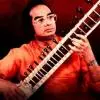
The album’s artwork depicts Shankar in a colorful, psychedelic visual style consistent with the era’s fusion aesthetic. Original pressings included minimal liner notes, with later reissues adding contextual essays on Shankar’s role in cross-cultural music. Almora received limited commercial attention upon release but gained retrospective acclaim as a cult classic in the global psychedelic and world music revival of the 2000s. Exact sales figures and chart performances remain unverified.
Ananda Shankar produced Almora during a period of experimentation with studio technology, following his relocation from Los Angeles to Mumbai. The album’s recording location and technical personnel are not fully documented, though sessions likely occurred at EMI’s Bombay studios. Shankar’s work on Almora preceded his 1980s collaborations with Western artists and his final album, 2001, released posthumously in 2000. The original master tapes’ current status is unknown.