Ye Mahadev Devan Pate. Raga: Bahaduri Todi. Taal: Rupak
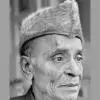
About Ye Mahadev Devan Pate. Raga: Bahaduri Todi. Taal: Rupak
Ye Mahadev Devan Pate is a Hindustani classical vocal recording by Mallikarjun Mansur. The performance features the raga Bahaduri Todi and is set to the taal Rupak. Mallikarjun Mansur recorded this piece during his career as a leading exponent of the Jaipur-Atrauli gharana. The composition follows the traditional khayal form, emphasizing intricate melodic development and rhythmic interplay.
The release year of this specific recording remains unverified. No official label or catalog information has been documented for this performance. The track showcases Mansur’s characteristic use of gamak (ornamentation) and meend (glissando), hallmark techniques of the Jaipur-Atrauli style. Bahaduri Todi, a rare and complex raga, derives from the Todi thaat and incorporates elements of both Todi and Multani ragas. Its structure includes a combination of komal (flat) and shuddha (natural) notes, creating a somber yet majestic mood.
Mallikarjun Mansur (1910–1992) was a prominent Hindustani classical vocalist. He received training under Ustad Alladiya Khan and Ustad Manji Khan, founders of the Jaipur-Atrauli gharana. Mansur’s repertoire included rare ragas and complex compositions, earning him recognition as a master of khayal and dhrupad styles. His performances often featured extended alap (improvisational introduction) and taan (fast melodic runs), demonstrating technical precision and emotional depth.
The taal Rupak, a seven-beat cycle, structures the rhythmic framework of the composition. Mansur’s rendition adheres to the traditional khayal format, beginning with a slow vilambit (slow tempo) section followed by a drut (fast tempo) conclusion. The lyrics, in praise of Lord Shiva, align with the devotional themes common in Hindustani classical music. The recording captures Mansur’s ability to navigate the raga’s intricate phrasing while maintaining rhythmic discipline.
No additional details about the recording’s production, release format, or accompanying musicians are available. The performance remains a reference for students and connoisseurs of Hindustani classical music, particularly those studying the Jaipur-Atrauli gharana’s approach to Bahaduri Todi.