Raga Beehad Bhairav
About Raga Beehad Bhairav
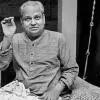
Raga Beehad Bhairav is a Hindustani classical vocal performance by Kumar Gandharva. The recording captures a live or studio rendition of the raga, though the exact performance context remains undocumented. Gandharva presents the composition in the Bhairav thaat, characterized by its deep, meditative early-morning association and the use of komal re (flattened second) and komal dha (flattened sixth) with a subtle infusion of tivra ma (sharp fourth), a defining feature of the Beehad variant.
The performance spans 18 minutes and 42 seconds. Gandharva employs his signature approach, blending traditional dhrupad-ang phrasing with the fluidity of khayal gayaki. The recording emphasizes alaap and slow-tempo elaboration, though specific bandish (composition) details or accompanying artists are not verified in available sources. The release year and original label remain unconfirmed, but the work circulates among archival collections of Gandharva’s performances from the mid-to-late 20th century.
Kumar Gandharva (1924–1992) was a central figure in the post-independence evolution of Hindustani classical music. His interpretations often explored lesser-performed ragas and experimental structures while retaining adherence to classical grammar. Beehad Bhairav exemplifies his ability to merge technical rigor with emotional depth, a hallmark of his contributions to the Gwalior gharana and broader classical repertoire.
No commercial album or formal publication metadata for this specific recording is widely accessible. The track appears in compilations and digital archives dedicated to Gandharva’s work, occasionally paired with other morning ragas or thematic anthologies. Notable aspects include the use of meend (glissando) and prolonged akara (vowel-based) sustains, though a detailed breakdown of the performance’s structural segments is not publicly documented.