Harmony
About Harmony
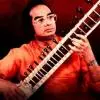
Harmony is a composition by Indian musician Ananda Shankar, released as part of his self-titled debut album in 1970. The track spans 4 minutes and 5 seconds and exemplifies Shankar’s fusion of traditional Indian classical music with Western psychedelic rock and funk elements. The album marked a departure from conventional raga performances by incorporating electric sitar, Moog synthesizer, and a rhythm section influenced by contemporary Western genres.
Ananda Shankar recorded the album in London under the production of a collaborative team that included British and Indian session musicians. The label Reprise Records distributed the release in Western markets, while HMV India handled its circulation in South Asia. Harmony stands out for its layered arrangement, where Shankar’s sitar melodies interact with distorted guitar riffs, tabla percussion, and synthesized textures. The track’s structure follows a cyclical progression common in Indian classical music but adapts it to a concise pop-song format.
The album received attention for its cross-cultural experimentation, though specific reception details for Harmony as a standalone track remain less documented. Shankar’s work on this project preceded his later collaborations with artists like Jimi Hendrix and The Rolling Stones, who cited his fusion approach as influential. No official singles were extracted from the 1970 album, but Harmony gained retrospective recognition through compilations and reissues in the 1990s and 2000s.
The original vinyl release featured Harmony as the third track on Side A, sequenced between Sagar (The Ocean) and Raghupati. Later CD reissues by labels such as Blue Moon Records and Drag City preserved the track in its unedited form. The composition’s legacy persists in samples and covers by electronic and hip-hop producers, though no comprehensive archive of these adaptations exists. The album’s liner notes credit Shankar as the primary composer and arranger, with contributions from unnamed studio musicians on bass, drums, and additional synthesis.
Contextual details about the recording sessions, alternate takes, or live performances of Harmony are incomplete. Shankar’s subsequent albums, including A Moog Raga (1971) and Ananda Shankar and His Music (1975), expanded on the stylistic groundwork established in this debut. The track remains a reference point for discussions on 1970s Indo-Western fusion, often analyzed alongside works by Ravi Shankar, Ali Akbar Khan, and Western acts like The Beatles during their Indian classical phase.