 Release Group

Recent Releases
View allTracklist (Primary Release)
About Bangla Desh
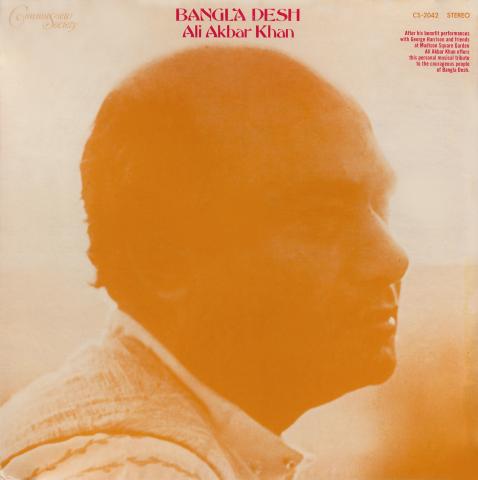
Bangla Desh is a 1972 studio album by Indian classical musician Ali Akbar Khan. Released on January 1, 1972, the album features two extended raga performances on the sarod, an instrument central to Hindustani classical music. Khan composed and performed both tracks, showcasing his mastery of the senia maihar gharana tradition.
The album contains two tracks: Raga Bhim Palashree and Raga Misra Shivaranjani. Each composition exemplifies Khan’s intricate alap-jor-jhala structure, a hallmark of his improvisational style. The recordings emphasize the meditative and technical dimensions of North Indian classical music, with Khan accompanied by tabla and tanpura, though specific accompanying artists remain undocumented in available sources.
Contexual details about the release label are unclear, as historical records from this period often omit commercial distribution specifics. The album title references the 1971 Bangladesh Liberation War, suggesting a thematic or dedicatory connection, but Khan did not publicly elaborate on this link. The performances adhere to traditional raga forms, with Raga Bhim Palashree known for its solemn, introspective mood and Raga Misra Shivaranjani for its blend of melodic complexity and emotional depth.
Ali Akbar Khan (1922–2009) recorded Bangla Desh during a prolific phase of his career, following his relocation to the United States in the late 1960s. The album contributed to the global dissemination of Hindustani classical music, reinforcing Khan’s reputation as a preeminent sarod virtuoso. Later reissues and compilations occasionally included these tracks, though the original 1972 release remains the primary reference for this work.