Raga Sohni Bhatiyar - Mharoji Bhulo Na Mane
About Raga Sohni Bhatiyar - Mharoji Bhulo Na Mane
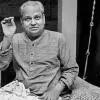
\"Raga Sohni Bhatiyar – Mharoji Bhulo Na Mane\" is a khayal performance by Kumar Gandharva in the raga Sohni Bhatiyar. Released as part of an unspecified album or live recording, the track spans 7 minutes and 26 seconds. The composition follows the traditional khayal format, a vocal genre in Hindustani classical music characterized by improvisation within a fixed melodic framework.
Kumar Gandharva rendered the piece in his signature style, blending technical precision with emotional depth. The lyrics \"Mharoji Bhulo Na Mane\" (Marathi for \"Oh Lord, do not forget me\") serve as the central thematic motif, reflecting devotional and introspective undertones. The recording captures Gandharva’s mastery of taan (melodic improvisation) and meend (gliding between notes), hallmarks of his interpretive approach.
The raga Sohni Bhatiyar belongs to the Kafi thaat (parent scale) and is traditionally performed during the late evening or early night. Gandharva’s rendition adheres to the raga’s structural rules while incorporating his personal innovations in phrasing and rhythmic play. Accompaniment details remain undocumented, but typical arrangements for his recordings included tanpura drone and tabla percussion.
The release year, label, and full album context are unverified in available sources. Kumar Gandharva (1924–1992) recorded extensively for labels such as HMV and private archives, with many performances later compiled posthumously. This track exemplifies his contributions to 20th-century Hindustani classical vocal music, particularly his revival of lesser-known ragas and folk-influenced compositions.
Notable aspects of the performance include the gradual unfolding of the alaap (unmetered introduction) followed by the bandish (fixed composition) in vilambit (slow) and drut (fast) tempos. The recording’s acoustic quality suggests a live or semi-live setting, though specific venue or session details are not confirmed. Gandharva’s interpretation of Sohni Bhatiyar remains a reference for students and performers of the raga.