Raga Sanjari: Saiyan Sunle Hori & Ratiya Darawa Lagor - 1963
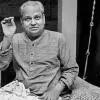
About Raga Sanjari: Saiyan Sunle Hori & Ratiya Darawa Lagor - 1963
Raga Sanjari: Saiyan Sunle Hori & Ratiya Darawa Lagor – 1963 is a Hindustani classical music recording by Kumar Gandharva. Released in 1963, the work features two compositions in Raga Sanjari, a rare and emotionally expressive raga associated with the Malwa region of central India. The recording spans 18 minutes and 55 seconds.
Kumar Gandharva performs both tracks in the khyal style, accompanied by traditional instrumental support. The first composition, Saiyan Sunle Hori, employs a vilambit (slow) tempo and explores the raga’s contemplative and devotional themes. The second piece, Ratiya Darawa Lagor, adopts a drut (fast) tempo with intricate taans and bol-banao patterns, showcasing Gandharva’s improvisational mastery. The recording captures his signature approach to raga interpretation, blending technical precision with deep emotional resonance.
The format and label of the original release remain undocumented in available sources. The work exemplifies Gandharva’s contributions to the post-independence revival of lesser-known ragas, particularly those from the Malwa and Nimad traditions. His rendition of Raga Sanjari emphasizes the raga’s folk-influenced melodic contours while adhering to classical structural conventions.
Notable aspects of the recording include Gandharva’s use of meend (glissando) and gamak (ornamentation) to highlight the raga’s characteristic phrases. The accompaniment, though uncredited in accessible records, follows the standard tabla and tanpura arrangement typical of the era. The 1963 recording predates Gandharva’s later, more widely distributed albums but remains a reference for students of the Malwa gharana and connoisseurs of his early work.
Contextual details about the recording session, production team, or initial distribution medium are incomplete. The work resurfaced in later compilations and reissues, often cited as a key example of Gandharva’s ability to elevate regional ragas to concert-stage prominence. The tracks retain significance in discourses on 20th-century Hindustani vocal music, particularly for their role in preserving and popularizing folk-classical hybrids.