Raga: Kirwani

About Raga: Kirwani
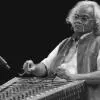
Kirwani refers to a 1997 recording of Raga Kirwani performed by santur exponent Tarun Bhattacharya and tabla artist Enayet Hossain. The track spans 6 minutes and 45 seconds and showcases the raga in the Hindustani classical tradition. The composition adheres to the Kafi thaat scale structure, characterized by the use of komal gandhar (flattened third) and komal nishad (flattened seventh) in descent, with shuddha nishad (natural seventh) in ascent.
The recording captures a live or studio performance, though the exact production context remains undocumented. Bhattacharya employs the santur, a trapezoidal hammered dulcimer, to articulate the raga’s melodic phrases, while Hossain provides rhythmic accompaniment on the tabla. The performance likely follows the conventional alaap-jor-jhala progression in the slower sections, transitioning into a composed gat with improvisational elaborations.
No official album or label attribution is confirmed for this specific track. The raga itself holds prominence in the Hindustani repertoire, often associated with late evening performances and expressions of contemplative or devotional themes. The 1997 recording stands as one of multiple interpretations by Bhattacharya, who contributed extensively to popularizing the santur in Indian classical music during the late 20th century.
Notable features of the track include the exploration of meend (glissando) and gamak (ornamentation) techniques on the santur, aligned with the raga’s introspective character. The tabla accompaniment integrates traditional theka patterns of teental or ektaal, though the precise taal structure for this recording is not specified. The collaboration between Bhattacharya and Hossain reflects cross-border artistic exchanges in classical music, with Hossain representing the Bangladesh school of tabla playing.
The recording’s release format—whether as part of a compilation, standalone single, or concert archive—remains unverified. No additional metadata regarding production personnel, recording location, or subsequent reissues is available.