Raga : Gaud Malhar
About Raga : Gaud Malhar
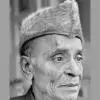
Gaud Malhar is a rendition of the eponymous raga in the Hindustani classical tradition performed by vocalist Mallikarjun Mansur. The recording spans 18 minutes and 3 seconds and showcases Mansur’s interpretation of the raga, a variant of the Malhar family known for its association with the monsoon season and its emotive depth. The performance adheres to the khayal style, a dominant vocal form in North Indian classical music characterized by improvisation within a structured framework.
The recording captures Mansur’s signature vocal technique, marked by intricate taans (fast melodic phrases) and a command of meend (gliding between notes). The raga’s scale typically employs the shuddha ni (natural seventh) in ascent and komal ni (flattened seventh) in descent, though specific structural details of this performance remain undocumented. Accompaniment details, including instrumental support or percussion, are not specified in available sources.
The release year, label, and original format (e.g., LP, cassette, digital) of this recording are unverified in public records. Mansur, a recipient of the Sangeet Natak Akademi Award (1966) and Padma Bhushan (1976), was a leading exponent of the Jaipur-Atrauli gharana, and his renditions of Malhar ragas are noted for their devotional and lyrical intensity. Notable tracks or sections within this performance, such as the alaap (unmetered introduction) or bandish (fixed composition), are not individually titled in the provided context.
The raga Gaud Malhar itself is traditionally performed during the late morning or early afternoon and is often linked to themes of rain, longing, and spiritual yearning. Mansur’s interpretation aligns with the gharana’s emphasis on gamak-laden (ornamented) phrasing and a balanced treatment of vilambit (slow) and drut (fast) tempos. Further metadata, including recording location, session musicians, or reissue history, is absent from accessible archives.