Rag Kedar
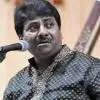
About Rag Kedar
Rag Kedar is a khayal performance in the Hindustani classical tradition recorded by vocalist Ustad Rashid Khan. The track appears as the second composition on his 1996 studio album Rashid Khan – Vocal, released by Moment! Records in digital media format. The recording spans 18 minutes and 50 seconds, showcasing Khan’s interpretation of Rag Kedar, a raga associated with the late evening or early night prahar in the Kafi thaat.
The album Rashid Khan – Vocal marked an early commercial release in Khan’s discography, issued on January 1, 1996. The recording captures his vocal technique, characterized by intricate taan patterns, meend (glissando), and a balance of vilambit (slow) and drut (fast) tempos. Accompaniment details for this track remain undocumented in available sources, though traditional Hindustani classical recordings of this period typically feature tabla and tanpura support. The album’s production credits and additional session musicians are not publicly specified.
Khan’s rendition of Rag Kedar adheres to the raga’s structural framework, emphasizing the shuddha dhaivat (natural sixth) and komal gandhar (flattened third) as defining swaras. The composition follows the khayal form, with an initial alaap exploration of the raga’s melodic contours before transitioning into the fixed bandish (compositional text). The track’s duration permits extended improvisation, a hallmark of Khan’s performances during this phase of his career.
The 1996 release coincided with Khan’s rising prominence in the Hindustani classical scene, following his training under Ustad Nissar Hussain Khan of the Rampur-Sahaswan gharana. While the album received limited commercial promotion, it contributed to the documentation of his early mature style. No reissues or remastered editions of this specific recording have been confirmed. Additional metadata regarding the recording location, engineers, or liner notes is not accessible in public archives.