Rag Bhavmat Bhairav (Teental)
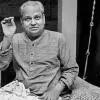
About Rag Bhavmat Bhairav (Teental)
Rag Bhavmat Bhairav (Teental) is a khayal performance in the Hindustani classical tradition rendered by Kumar Gandharva. The recording captures a concise interpretation of Rag Bhavmat Bhairav, a rare variant rooted in the Bhairav thaat, set to the 16-beat teental rhythmic cycle. Gandharva presents the composition with characteristic improvisational phrasing, emphasizing the raga’s contemplative and introspective mood through alaap-like elaborations and taan patterns.
The performance spans 5 minutes and 9 seconds. The exact release date and original format remain undocumented, though the recording circulates in digital archives and compilation albums dedicated to Gandharva’s work. No commercial label association is verified for this specific track, but his broader discography appears on labels such as HMV (now Saregama) and Music Today. The composition’s textual content is not explicitly cited in available sources, though traditional bandish (lyrical framework) in Bhavmat Bhairav often explores themes of devotion or seasonal transitions, aligned with the raga’s early-morning (pratah) performance context.
Kumar Gandharva (1924–1992) developed a distinct vocal style marked by deep emotional resonance and unconventional gayaki (singing technique), frequently revisiting lesser-known ragas. This recording exemplifies his approach to Bhairav-derived structures, balancing technical precision with expressive spontaneity. The accompaniment details—such as tabla or tanpura artists—are not specified in the provided context. The track serves as a representative sample of Gandharva’s mid-to-late career output, where he prioritized raga exploration over commercial constraints.
Scholarly and archival references to this performance are limited, with the recording primarily accessible through private collections and online platforms specializing in Indian classical music. The brevity of the piece suggests it may originate from a live concert excerpt or a studio session intended for instructional or demonstrative purposes. Further metadata, including the recording location or session musicians, is absent from public records.