Rag Beehad Bhairav
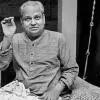
About Rag Beehad Bhairav
Rag Beehad Bhairav is a Hindustani classical vocal performance by Kumar Gandharva, a prominent 20th-century Indian classical vocalist known for his innovative interpretations of traditional ragas. The recording captures a khayal composition in Rag Beehad Bhairav, a rare variant of the Bhairav thaat characterized by its use of komal re (flattened second) and komal dha (flattened sixth) alongside the shuddha ma (pure fourth).
Gandharva rendered this performance in his distinctive style, blending the gayaki (vocal technique) of the Gwalior and Jaipur-Atrauli gharanas while incorporating folk and regional influences. The recording spans 9 minutes and 4 seconds, featuring an alaap followed by a structured bandish (composition) with improvisational taans (melodic phrases). The accompaniment includes a tanpura for drone and a tabla for percussion, though specific accompanying artists remain undocumented in available sources.
The release date and original format of this recording are not explicitly verified in public records. Gandharva frequently performed and recorded for HMV (His Master’s Voice) and Doordarshan (Indian national television) during his career, and this track likely originated from a live concert or studio session in the 1970s or 1980s, aligning with his active period post-1960s. No commercial album title or label catalog number is definitively associated with this specific rendition, though it appears in compilations of his work.
The composition emphasizes the raga’s introspective and meditative qualities, with Gandharva’s voice navigating the lower and middle octaves to highlight the beehad (discordant) intervals that define the raga’s emotional depth. The performance adheres to the traditional vilambit (slow) and drut (fast) sections, with the bandish text often drawn from devotional or philosophical themes. Notable tracks by Gandharva in similar ragas include his interpretations of Rag Malkauns and Rag Todi, which share his signature exploratory approach.
Due to limited archival documentation, the exact venue or occasion of this recording remains unclear. Kumar Gandharva’s discography, while extensive, often circulates through private collections, reissued LPs, and digital restorations. This performance exemplifies his contribution to expanding the Hindustani classical repertoire by reviving lesser-known ragas and adapting them to contemporary audiences.