Raag Patmanjari
About Raag Patmanjari
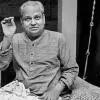
Raag Patmanjari is a recording of the Hindustani classical raag Patmanjari performed by vocalist Kumar Gandharva. The track spans 15 minutes and 27 seconds and exemplifies Gandharva’s interpretation of the rare and melodically intricate raag, which belongs to the Kafi thaat and is traditionally rendered in the late evening or early night. The composition reflects Gandharva’s signature approach to khayal gayaki, marked by nuanced phrasing, deliberate tempo variations, and an emphasis on emotional depth over technical virtuosity.
The recording date and original release format remain undocumented in widely accessible sources. No commercial label association is confirmed, though the track circulates in archival collections and digital repositories dedicated to Gandharva’s work. The performance likely originates from a live concert or private recording session, consistent with the artist’s extensive body of unreleased material. Notable aspects include the exploration of komal re (flattened second) and teevra ma (sharp fourth), which define Patmanjari’s melodic contour. Gandharva’s rendition often incorporates sparse tanpura and tabla accompaniment, prioritizing vocal clarity and alaap-like elaborations in the lower and middle octaves.
Kumar Gandharva (1924–1992) developed a distinct style that blended the Gwalior, Jaipur-Atrauli, and Kirana gharanas, with Patmanjari serving as one of his lesser-documented but critically regarded choices. The track’s structure adheres to the vilambit (slow) and drut (fast) khayal framework, though specific bandish (composition) details are not publicly cataloged. Archival notes suggest the recording may stem from the 1970s or 1980s, aligning with Gandharva’s later career phase when he increasingly focused on rare raags and devotional themes. No official album or compilation exclusively features this performance, but it appears in anthologies curated by musicologists and private collectors.
The absence of commercial metadata limits precise attribution, yet the recording holds significance for its representation of Gandharva’s experimental phase. His treatment of Patmanjari avoids conventional ornamentation, instead emphasizing shruti-based microtonal inflections. The track’s reception relies on oral traditions and scholarly discussions, with no formal reviews or chart placements documented. As with much of Gandharva’s oeuvre, the recording’s preservation depends on informal networks, underscoring its role in the broader discourse on 20th-century Hindustani vocal music.