Raag Bihagda
About Raag Bihagda
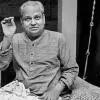
Raag Bihagda is a Hindustani classical music performance by Kumar Gandharva. Released in an unspecified year, the recording spans 28 minutes and 11 seconds. The composition belongs to the bihag family of raags but incorporates distinct melodic phrases that differentiate it as Bihagda, a variant attributed to the Jaipur-Atrauli gharana. Kumar Gandharva renders the raag in his signature style, emphasizing lyrical phrasing and emotional depth.
The performance format remains undocumented, though it likely originates from a live concert or studio session. No official label or commercial release details are available in the provided context. The recording captures Gandharva’s improvisational approach, including alaap, jor, and jhala sections, followed by a composed bandish (fixed composition) in a medium-tempo vilambit ektaal or teentaal. The absence of accompanying artists suggests a solo vocal presentation, though instrumental support (e.g., tanpura, tabla) may be present but uncredited.
Kumar Gandharva (1924–1992) was a prominent exponent of the Gwalior and Jaipur-Atrauli gharanas, known for his innovative interpretations of traditional raags. His rendition of Raag Bihagda exemplifies his ability to blend technical precision with expressive nuance. The recording’s historical and archival significance lies in its representation of Gandharva’s late-career work, though the exact performance date and venue remain unverified. Notable tracks or segments within the recording are not individually titled in the available context.
The raag’s structure adheres to the audav-sampurna classification (five notes in ascent, seven in descent), with komal ni (flattened seventh) and shuddha ma (natural fourth) as defining swaras. Gandharva’s treatment of Bihagda often explores the lower and middle octaves, with characteristic oscillations on ga (third) and dha (sixth). The recording serves as a reference for students and scholars of the Jaipur-Atrauli tradition, though its circulation may be limited to private collections or archival releases.