Namaskar
About Namaskar
Namaskar is a composition by Indian musician Ananda Shankar released as part of his self-titled debut album. The track appears on the 1970 LP Ananda Shankar, issued by Reprise Records in the United States and The Gramophone Company of India (later EMI India) in India. The album fused traditional Indian classical instruments with Western psychedelic rock and funk, marking a distinctive crossover in global fusion music of the era.
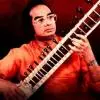
Shankar composed and arranged Namaskar with a blend of sitar, tabla, and Moog synthesizer, accompanied by a rhythm section featuring electric guitar, bass, and drums. The track runs for 5 minutes and 14 seconds. Its title translates to \"greeting\" or \"salutation\" in Sanskrit, reflecting the artist’s intent to bridge cultural divides through music. The piece opens with a sitar alap in Raga Pilu before transitioning into a groove-driven arrangement with prominent synthesizer layers.
The album Ananda Shankar received production assistance from engineers at EMI Studios in Bombay (now Mumbai) and Sunset Sound Recorders in Los Angeles. Shankar collaborated with session musicians from both India and the US, though specific personnel credits for Namaskar remain partially undocumented in surviving release notes. The track exemplifies the album’s broader experimentation with raga-based improvisation over Western harmonic structures.
Reprise Records released the album in the US in March 1970, while the Indian edition followed later the same year. Namaskar gained retrospective recognition as a standout track, often cited in discussions of 1970s Indo-fusion and the broader Asian Underground movement. The composition was later sampled and reinterpreted by electronic and hip-hop artists, though no official single release for Namaskar is verified. The original LP pressing included liner notes by Shankar describing his approach to merging Eastern and Western musical traditions.
Ananda Shankar’s work on Namaskar and the parent album influenced subsequent generations of fusion artists in India and abroad. The track remains a reference point for studies of cross-cultural music synthesis in the late 20th century. Archival copies of the 1970 LP are held in collections such as the Saregama India Ltd. vaults and the Library of Congress, though master tapes’ current condition is not publicly documented.