Khayal Madhyalaya in Teentala "Kaiso Niko Lago"
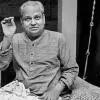
About Khayal Madhyalaya in Teentala "Kaiso Niko Lago"
\"Kaiso Niko Lago\" is a khayal composition in Madhyalaya set to Teentala (16-beat cycle) performed by Kumar Gandharva. The recording spans 7 minutes and 42 seconds. Gandharva renders the piece in his signature style, blending traditional Dhrupad influences with the fluidity of khayal gayaki. The context of the release—whether a live performance, studio album, or archival recording—remains undocumented in available sources.
The composition belongs to the Hindustani classical tradition, though the specific raga is not explicitly stated in the provided context. Gandharva’s interpretation emphasizes lyrical phrasing and rhythmic improvisation, characteristic of his approach to semi-classical and classical forms. The track title translates roughly to \"How can I describe this?\" in Awadhi or Braj, suggesting a thematic focus on emotional or philosophical inquiry.
Kumar Gandharva (1924–1992) was a prominent Indian classical vocalist known for his innovations in raga presentation and his work in reviving lesser-known ragas. His recordings often featured collaborations with instrumentalists, though the accompanying artists for this track are not specified. The label or production entity behind the release is also unconfirmed, as is the exact year of recording or publication.
The structure of the performance likely follows the standard khayal format: a gradual alaap-like introduction leading into the composed sthayi and antara sections, followed by improvisational taans and rhythmic play. The use of Teentala provides a framework for intricate layakari (rhythmic variation), a hallmark of Gandharva’s renditions. No additional details about the recording session, such as venue or accompanying tanpura/sarangi players, are available.
This track exemplifies Gandharva’s contribution to 20th-century Hindustani vocal music, particularly his ability to merge technical rigor with expressive depth. Without further metadata, the precise historical or discographic placement of the recording cannot be established.