Duetto - Jugalbandi - Raga Gujaree - Todi

About Duetto - Jugalbandi - Raga Gujaree - Todi
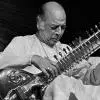
Duetto – Jugalbandi – Raga Gujaree – Todi is a collaborative track recorded by sitarist Ustad Vilayat Khan and shehnai virtuoso Ustad Bismillah Khan. The composition appears as the opening piece (track A) on the 1967 album Duets, released under the His Master’s Voice label. The recording captures a jugalbandi (duet) in Raga Gujaree Todi, a rare fusion of Raga Gujari Todi and Raga Todi, showcasing the artists’ improvisational interplay within the North Indian classical tradition.
The album Duets was issued as a 12\" vinyl LP, a standard format for classical releases of the era. The label did not disclose the exact recording location or session details, but the production aligns with His Master’s Voice’s catalog of Indian classical collaborations during the 1960s. The track exemplifies the contrast between Khan’s sitar, characterized by intricate taans (melodic runs), and Bismillah Khan’s shehnai, noted for its breath-controlled phrasing and tonal depth. The accompaniment, if present, remains uncredited in available documentation.
Both artists were leading figures in their respective instruments by 1967. Vilayat Khan, a sixth-generation sitarist of the Etawah gharana, had already established his gayaki ang (vocal-style) technique, while Bismillah Khan held recognition as the preeminent shehnai exponent, later awarded India’s Bharat Ratna in 2001. The jugalbandi format, though common in live performances, was less frequently documented in studio recordings of the period, making this release a notable artifact of Hindustani classical fusion.
The 1967 pressing of Duets did not include liner notes detailing the raga structure or performance duration. Later reissues or digital remasters, if any, have not been officially cataloged under the original label. The track’s reception at release is undocumented, but posthumous analyses highlight its role in demonstrating the adaptive possibilities of jugalbandi beyond vocal-instrumental pairings.