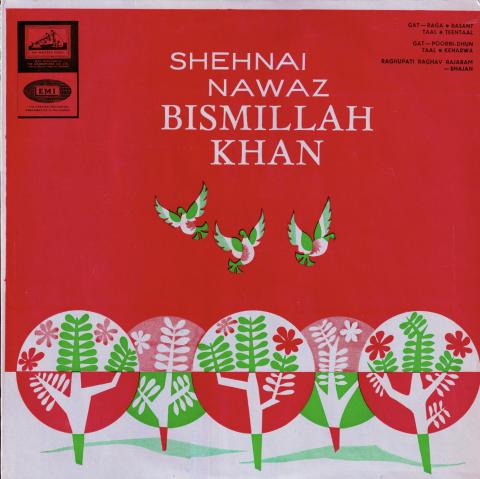

About Shehnai Nawaz
Shehnai Nawaz is a studio album by Indian classical musician Ustad Bismillah Khan, released in 1966. The record marks one of Khan’s early commercial recordings under the His Master’s Voice label and features his signature shehnai performances in traditional North Indian classical and devotional styles.
Khan composed and performed all tracks on the album. The release consists of three primary recordings: a rendition of Raga Basant set to Teentaal, a Gat-Poorbi-Dhun in Keharwa rhythm, and the devotional bhajan Raghupati Raghav Rajaram. The album showcases Khan’s mastery of the shehnai, blending intricate raga structures with folk and devotional elements.
The format of the release is a 12\" vinyl LP, typical of Indian classical music distributions in the mid-20th century. The recording session and production details remain undocumented, but the album’s 1966 release aligns with Khan’s rising prominence as a leading exponent of the shehnai. No reissues or digital remasters have been officially confirmed from the original label.
Raga Basant opens the album with an alap-jor-jhala progression, followed by a composed gat in Teentaal. The second track, Gat-Poorbi-Dhun, adopts a lighter Keharwa rhythm, reflecting Khan’s ability to adapt classical techniques to folk-inspired dhuns. The closing bhajan, Raghupati Raghav Rajaram, remains a staple in his repertoire, often associated with Mahatma Gandhi’s spiritual gatherings.
The album’s title, Shehnai Nawaz, translates to \"shehnai virtuoso,\" reinforcing Khan’s lifelong identification with the instrument. While specific sales figures or chart performances are unavailable, the record contributed to his reputation as a cultural icon in Indian classical music. Later compilations and tribute albums frequently reference these 1966 recordings as foundational works in his discography.