
About Pukaar
Pukaar is a collaborative studio album by Pakistani qawwali vocalist Nusrat Fateh Ali Khan and Indian sarangi maestro Sultan Khan. The album released in 2002 under the label Navras Records in CD format. It features three extended tracks that blend Sufi qawwali traditions with classical Hindustani instrumentation.
The recording captures a fusion of Khan’s vocal improvisations and Sultan Khan’s sarangi accompaniment. The album opens with Allah-Hoo, a repetitive devotional chant structured around the invocation of the divine name. The track emphasizes rhythmic cycles and melodic variations characteristic of qawwali. The second piece, Ali Ali Ali Maula Ali Ali, centers on praise for Ali ibn Abi Talib, incorporating call-and-response patterns between the lead vocal and instrumental refrains. The final track, Main to Piya Se Naina Lagaa Aayi Re, adopts a lighter, semi-classical thumri style, with lyrics depicting romantic longing in the context of Sufi metaphor.
The release date aligns with the posthumous period of Nusrat Fateh Ali Khan’s discography, as the artist died in 1997. The album’s production credits and session details remain partially undocumented, though Navras Records marketed it as an official collaboration. The tracklist omits composer attributions for individual pieces, a common practice in traditional and improvisational recordings of this genre. No alternate editions or reissues have been verified.
Critically, the album exemplifies the cross-border exchange between Pakistani qawwali and Indian classical music during the late 20th century. Sultan Khan’s sarangi, a bowed string instrument, provides a counterpoint to Nusrat’s vocal phrasing, while the arrangement retains the spontaneous energy of live performance. The absence of percussion or additional instrumentation focuses attention on the interplay between voice and sarangi.
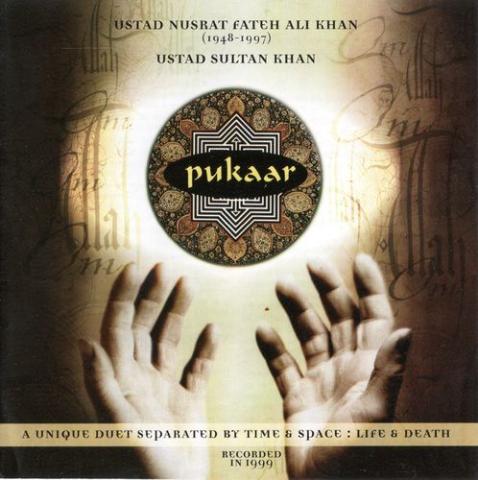
The physical CD release includes no liner notes or detailed session metadata. The cover art features a minimalist design with the artists’ names and the album title in Urdu and English script. Distribution primarily targeted South Asian markets, with limited availability in Western retail channels at the time of release.