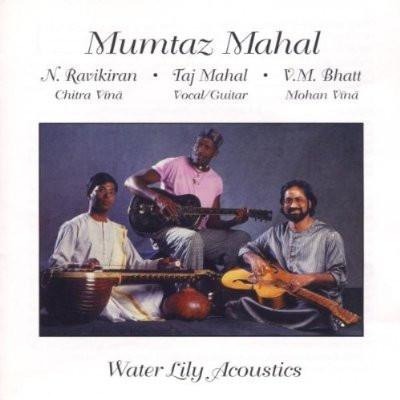


About Mumtaz Mahal
Mumtaz Mahal is a collaborative studio album released in 1995 under the label Water Lily Acoustics. The recording features American blues musician Taj Mahal alongside Indian classical artists Narasimhan Ravikiran on chitravina and Vishwa Mohan Bhatt on mohan veena. The album blends North Indian classical music with blues, folk and reggae influences.
The project originated from a live performance at the 1993 Sawai Gandharva Music Festival in Pune, India, where Taj Mahal shared the stage with Ravikiran and Bhatt. The subsequent studio sessions produced seven tracks that incorporated raga-based improvisations alongside blues structures. Water Lily Acoustics issued the recording on compact disc in 1995 with no documented reissues or alternate formats.
The tracklist includes Coming of the Mandinka, which opens the album with a fusion of Mandinka rhythms and Hindustani alankars, followed by Come On In My Kitchen, a reinterpretation of Robert Johnson’s blues standard framed in raga Todi. Rolling on the Sea integrates konnakol patterns with slide guitar, while Mary Don’t You Weep adapts the traditional gospel song using the kirwani scale. The album also features Stand by Me, a rendition of the Ben E. King classic arranged with tanpura drones, and Johnny Too Bad, a reggae-inflected piece with sitar-like veena phrasing. The closing track, Curry and Quartertones, combines Carnatic gamakas with blues bends.
Production credits list Taj Mahal as the primary composer for most tracks, with Ravikiran and Bhatt contributing arrangements and improvisational sections. The liner notes indicate recording sessions took place in Madras (now Chennai) and California, though specific studio names and engineers remain undocumented. The album cover art depicts a fusion of Mughal miniature motifs with blues iconography, designed by an uncredited artist.
Critical reception at the time noted the album’s role in cross-cultural musical dialogue, though commercial performance data is not publicly available. Live performances of the material occurred sporadically in 1995 and 1996, including a documented concert at the Stern Grove Festival in San Francisco. No follow-up collaborations between the three artists were officially released.