About Hypnotic Santoor
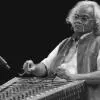
Hypnotic Santoor is a studio album by Indian classical musician Tarun Bhattacharya, released on January 9, 2001. The album features Bhattacharya on the santoor, a trapezoidal hammered dulcimer of Kashmiri origin, accompanied by traditional North Indian classical instrumentation. The release format is a commercial audio CD, though the publishing label remains undocumented in available sources.
The album comprises four tracks centered on Raag Malkauns, a pentatonic raga in the Hindustani classical tradition. The opening track presents an alap, followed by jod and jhala, the three stages of raga elaboration. Subsequent tracks include a gat (fixed composition) in Teental set to a slow (vilambit) tempo, a faster (drut) rendition of the same raga, and a concluding dhun (light classical piece) in Taal Kaharwa, a rhythmic cycle of eight beats. The performances adhere to the gayaki ang (vocal-style phrasing) characteristic of Bhattacharya’s interpretation of the santoor.
Tarun Bhattacharya trained under his father, Robindra Bhattacharya, and later refined his technique with guidance from sitar maestro Ravi Shankar. His adaptations of the santoor for classical khayal-style renditions contributed to the instrument’s prominence in 20th-century Hindustani music. Hypnotic Santoor exemplifies this approach, emphasizing melodic intricacy and rhythmic precision. The album’s production details, including accompanying artists and recording location, are not publicly verified.
The release date aligns with Bhattacharya’s active period as a recording artist and performer, during which he collaborated with labels such as HMV (now Saregama) and Music Today. While the album’s reception and commercial performance remain unrecorded, its focus on Raag Malkauns reflects a recurring theme in his discography, alongside other ragas like Bhairav and Yaman. The tracklist omits composer credits for the dhun, a common practice in classical releases where traditional or folk melodies are reinterpreted.