 Release Group

Recent Releases
View allTracklist (Primary Release)
About Raga Mian Ki Malhar
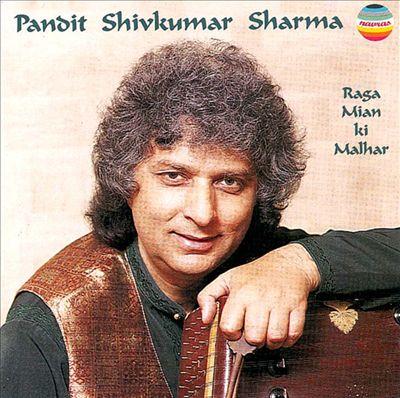
Raga Mian Ki Malhar is a studio album by Indian classical musician Shivkumar Sharma, released on January 1, 1993. The recording belongs to the Hindustani classical tradition and features Sharma on the santoor, an instrument he adapted and popularized in Indian classical music. The album presents a single extended performance of Raga Mian Ki Malhar, a monsoon-themed raga associated with the Malhar family of ragas.
Sharma structured the composition in the conventional khayal format, dividing the performance into distinct sections. The album opens with a detailed alap, followed by jor and jhala, which establish the raga’s melodic framework. The subsequent segments include a madhya lay gat set in Jhaptal (a 10-beat cycle), a drut gat in Teental (a 16-beat cycle), and a concluding drut gat in Ektal (a 12-beat cycle). The performance adheres to the gayaki ang style, where instrumental renditions emulate vocal phrasing and ornamentation.
The album was released as a standalone work under Sharma’s name, though the label information remains undocumented in available sources. The recording captures Sharma’s technical command of the santoor, particularly in executing rapid taans (melodic runs) and sustaining the raga’s emotive depth. Raga Mian Ki Malhar exemplifies Sharma’s contributions to expanding the santoor’s role in Hindustani classical music during the late 20th century.
No additional details about production personnel, accompanying artists, or alternate editions are confirmed. The tracklist consists of one continuous performance, segmented by tempo and rhythmic variation as noted in the title. The album remains a reference for interpretations of Mian Ki Malhar within the instrumental dhrupad-ang and khayal-ang traditions.