 Release Group

Recent Releases
View allTracklist (Primary Release)
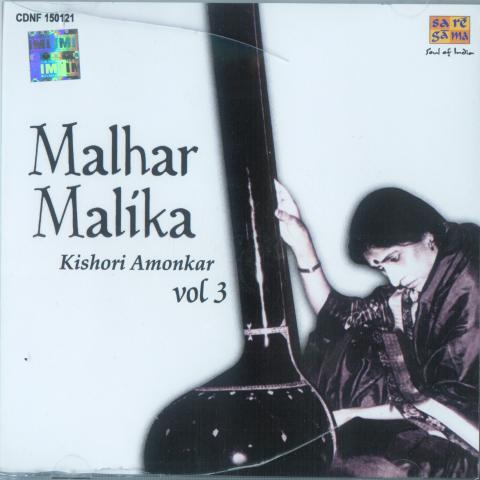
About Malhar Malika, Volume 3
Malhar Malika, Volume 3 is a studio album by Indian classical vocalist Kishori Amonkar. Released on January 1, 1994, the album forms part of her Malhar Malika series dedicated to the Malhar family of ragas, which traditionally evoke the monsoon season in Hindustani classical music. The label for this release remains undocumented in available sources.
Amonkar presents two compositions in this volume. The first track features Raga Meera Malhar with the bandish Tum Ghan Se Ghanshyam, a devotional piece addressing Lord Krishna in the context of rain and divine play. The second track explores Raga Anand Malhar through the bandish Barasat Ghan Aayo Rangilo, a composition celebrating the arrival of the monsoon with vivid imagery of dark clouds and vibrant colors. Both performances adhere to the khyal style, showcasing Amonkar’s signature vocal control and improvisational depth.
The album continues Amonkar’s interpretation of the Malhar ragas, building on her earlier volumes in the series. The recordings capture her mature artistic phase, marked by intricate taans and a balance of traditional structure with personal expression. Specific session details, including accompanying artists or recording locations, are not publicly confirmed. The total runtime of the album is also undocumented, though the release comprises two primary tracks.
Critics and listeners often associate the Malhar Malika series with Amonkar’s ability to convey the emotional and seasonal essence of the Malhar ragas. This volume contributes to her broader discography as a leading exponent of the Jaipur-Atrauli gharana, though analytical reception of this particular installment is not widely archived. The album remains a reference for students and enthusiasts of Hindustani classical vocal music, particularly in the context of raga-based monsoon themes.