Raigarh
Introduction
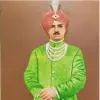
The Raigarh gharana of Kathak, the youngest of all the major Kathak gharanas, was developed in the early twentieth century in Chhattisgarh during the reign of Maharaja Chakradhar Singh (1905-1947), who ruled the princely state of Raigarh from 1924 until his death in 1947. Raja Chakradhar Singh was a visionary and great patron of Indian arts and classical dance, inviting dance experts and music experts from different parts of the country to his court. Credit goes to him under whose patronage Raigarh flourished as a center of art and culture, earning it the title of "Cultural capital of Chhattisgarh," famous for its unique Kathak style and classical music.
Due to Raja Saheb's deep affection and respect for the art form, the best and senior dancers and gurus of Lucknow, Jaipur, and Benares took shelter together in the Raigarh court. Maharaj himself learned and researched both the Jaipur and Lucknow styles in-depth from these masters, and furthermore alloyed the aspects of both gharanas to develop an independent style, which came to be known as the Raigarh gharana. The gharana's compositions were amalgamated parts of the Jaipur and Lucknow traditions, blending the grace of Lucknow, the energy of Jaipur, and the devotional depth of Benares into a unique fusion approach.
Chakradhar Singh read ancient texts and sought advice from scholars in India to form 'bols'—mnemonic syllables combined to create works to be danced to. He also created the Taal Chakra, a circular diagrammatic form of the Taal Avartan (rhythmic cycle). The Maharaj composed many innovative paran compositions and coined unique names for them suiting their bols or choreography, including dal-badal paran, chamak-bijali paran (lightning flash), kilkil paran (having bird sounds), and gajavilas (imitating elephant walk). Unlike the older gharanas that focused on preserving traditional techniques, Raigarh embraced experimentation, introducing fresh rhythmic compositions, intricate footwork sequences, and theatrical elements that gave performances a dynamic flair. The gharana has its own compositions of thumris, ghazals, todas, and bols that are unique in themselves. Key exponents who received training in the Raigarh court include Kartik Ram, Guru Kalyan Das, Firtu Maharaj (Firatu Das), and Burman Lal, who helped develop and propagate this distinctive fusion style.