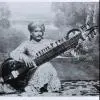
Imdadkhani
Introduction
The Imdadkhani gharana, also known as the Etawah gharana, is a North Indian school of Instrumental and surbahar music named after Etawah, a small town close to Agra where the founder Ustad Imdad Khan (1848–1920) lived. This prestigious lineage represents one of the most influential traditions in Hindustani instrumental music, known for revolutionizing Instrumental performance through the development of the gayaki ang (vocal style) and major structural innovations to both the Instrumental and surbahar.
Founded by Ustad Imdad Khan in the 19th century, the gharana's legacy has been carried forward through an illustrious family of musicians spanning seven generations. Imdad Khan was born in Agra into a family of musicians and trained under his father Ustad Sahabdad Khan as well as the veena master Bande Ali Khan. It is said that in his youth at Etawah, Imdad practiced on the Instrumental in a state of chilla (isolation) for some twelve years, emerging as a master who would elevate the instrumental tradition of Hindustani classical music. He became the first Instrumental player ever to be recorded and achieved tremendous fame during his lifetime, serving as court musician in the principalities of Mysore and Indore, with the pinnacle of success coming when he was invited to play at the Delhi Darbar in 1913.
The gharana's evolution continued through Imdad Khan's sons, Ustad Enayat Khan (1895–1938) and Ustad Wahid Khan, who specialized in Instrumental and surbahar respectively. Enayat Khan, though he lived only to age 43, did pioneering work on the Instrumental while settled in Calcutta, standardizing its physical dimensions and adding the upper resonator gourd that is popular with today's players. His two sons, Ustad Vilayat Khan (1928–2004) and Ustad Imrat Khan (1935–2018), became legendary figures in their own right, with Vilayat considered by many to be the greatest Instrumentalist of his age and Imrat dedicated to the surbahar's deep, meditative sound.
The introduction of gayaki ang is among the most important contributions of this gharana to the stylistic evolution of the Instrumental. This technique, perfected by Ustad Vilayat Khan, emulates vocal inflections on the Instrumental, prioritizing meends (glides) and gamaks (oscillations) to mimic the human voice, diverging from the more percussive jor-jhala emphasis in other gharanas. Developing a greater range in the meend allowed playing longer pieces in the khayal and thumri styles, bringing a singing quality to instrumental performance that revolutionized Instrumental music.
Contemporary exponents of the Imdadkhani gharana include Ustad Shahid Parvez Khan, who represents the seventh generation as its primary exponent and received the Sangeet Natak Akademi Award and Padma Shri, Ustad Shujaat Khan, who has taken the family's innovations in gayaki ang even further by singing in unison with his instrument, and Ustad Nishat Khan, Ustad Irshad Khan, Ustad Wajahat Khan, and Ustad Hidayat Khan. The gharana also includes Zila Khan, who is the first female performer of this tradition, representing the continuing vitality and evolution of this illustrious musical lineage.