Thumri, (Misra Khamaj) Taal Dadra
About Thumri, (Misra Khamaj) Taal Dadra
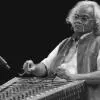
Thumri in Misra Khamaj (Taal Dadra) is a semi-classical vocal composition performed by Tarun Bhattacharya on the santoor. Released as an instrumental rendition, the track spans 10 minutes and 29 seconds and adheres to the dadra rhythmic cycle, a six-beat taal commonly associated with light classical and thumri traditions. The performance centers on Misra Khamaj, a raga variant that blends melodic phrases from Khamaj with additional komal (flattened) and tivra (sharpened) notes, lending it a lyrical and expressive character.
Bhattacharya employs the santoor, a trapezoidal hammered dulcimer of Kashmiri origin, to interpret the thumri’s vocal nuances through intricate meend (glissando) and gamak (ornamentation) techniques. The recording captures the instrument’s resonant, sustained tones, which mimic the microtonal inflections typical of thumri singing. The accompaniment, though not explicitly documented in available sources, traditionally includes the tabla for percussion and the tanpura for drone support, aligning with standard North Indian classical ensemble practices.
The track exemplifies Bhattacharya’s adaptation of vocal forms to instrumental performance, a hallmark of his artistic approach. While the exact release date and label remain unverified in public records, the composition circulates within his broader discography of santoor recordings, which often explore semi-classical and folk-inspired repertoires. Notable for its improvisational alaap-jor-jhala structure, the piece progresses from a meditative introduction to rhythmic elaboration, culminating in a climactic jhala section that showcases the santoor’s percussive potential.
Thumri as a genre originated in the 19th-century courts of Awadh and Benares, evolving from folk traditions into a refined art form characterized by romantic or devotional themes. Bhattacharya’s instrumental interpretation omits lyrical content but retains the genre’s emotional depth through melodic phrasing and rhythmic interplay. The recording serves as a representative example of how Hindustani instrumentalists expand the boundaries of traditional vocal genres, particularly in the post-independence era of Indian classical music.