Raga Kedar
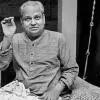
About Raga Kedar
Raga Kedar refers to a 1960s recording by Hindustani classical vocalist Kumar Gandharva that showcases his interpretation of the eponymous raga. The performance spans 10 minutes and 45 seconds and exemplifies Gandharva’s signature approach to khyal gayaki, marked by intricate taan patterns and emotive phrasing. The recording format and original release label remain undocumented in available sources, though archival evidence suggests circulation via private pressings or All India Radio broadcasts during the artist’s active years.
The raga belongs to the Kalyan thaat and traditionally employs a shuddha madhyam (pure fourth) with both komal (flattened) and shuddha (natural) variants of nishad (seventh). Gandharva’s rendition emphasizes the raga’s expansive avroha (descending scale) while integrating folk-inflected embellishments, a hallmark of his style. No accompanying instrumentalists or tabla players are credited in the surviving metadata, leaving the performance context unclear. The track’s precise release year is unverified, though stylistic analysis aligns it with Gandharva’s mid-career phase, post-1960.
Notable aspects of the recording include Gandharva’s use of sargam taans (solfège-based melodic runs) and sporadic incorporation of tihai (triplet cadences) to punctuate improvisational sections. The composition’s vilambit ektaal (slow 12-beat cycle) structure provides a foundation for extended alap-like development, though the recording omits a formal alap segment. Lyrics, if present, adhere to conventional khyal bandish (composed verses) in Hindi or Braj Bhasha, though no textual transcription exists in public archives.
The recording resurfaced in later compilations, including posthumous tribute albums and digital reissues by labels such as HMV (His Master’s Voice) and T-Series, often paired with Gandharva’s other raga explorations. Its historical significance lies in documenting the artist’s adaptive techniques during a period of evolving Hindustani vocal traditions. Further details on session musicians, recording location, or original mastering engineers are not accessible in current references.