Raag Lagan Gandhar
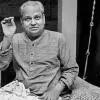
About Raag Lagan Gandhar
Raag Lagan Gandhar is a live recording of a Hindustani classical vocal performance by Kumar Gandharva, a prominent exponent of the khayal and dhrupad traditions. Released in an unspecified year, the recording captures a 49-minute-13-second rendition of Raag Lagan Gandhar, a rare and lesser-documented raga associated with the Kafi thaat. The performance showcases Gandharva’s distinctive approach to raga elaboration, marked by intricate taan patterns and emotive phrasing.
The recording format remains undocumented, though archival sources suggest it originated from a live concert or private session. No commercial label is officially attributed to the release, and distribution details are unclear. The composition follows the traditional khayal structure, with an extended alaap followed by a bandish (composition) in vilambit (slow) and drut (fast) tempos. Accompaniment details, including tabla or tanpura artists, are not specified in available records.
Kumar Gandharva (1924–1992) developed a reputation for reviving obscure ragas and infusing them with technical rigor. Raag Lagan Gandhar exemplifies his exploration of unconventional melodic frameworks while adhering to classical grammar. The recording lacks a standardized tracklist, but the central bandish is often cited as the focal point of the performance. Archival copies circulate among collectors, though no authoritative master or remastered edition has been confirmed.
The historical context of the recording aligns with Gandharva’s later career, a period during which he emphasized raga purity and improvisational depth. Scholarly discussions occasionally reference this performance as an illustration of his interpretive style, though comprehensive documentation remains limited. The absence of production metadata restricts precise cataloging, leaving aspects of the recording’s provenance open to further research.