Raag Hament (Teentaal)
About Raag Hament (Teentaal)
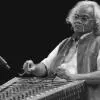
Raag Hament (Teentaal) is a recorded performance of Hindustani classical music by santoor exponent Tarun Bhattacharya. The composition renders Raag Hament, a rare melodic structure associated with the late evening or early night raag tradition, set to a teentaal rhythmic cycle of 16 beats. The track spans 8 minutes and 43 seconds in duration.
The recording showcases Bhattacharya’s interpretation of the raag through the santoor, a trapezoidal hammered dulcimer integral to Kashmiri and North Indian classical repertoires. The performance adheres to the alaap-jor-jhala framework, progressing from an unmetered exploratory introduction to structured rhythmic elaboration. Accompaniment details remain undocumented in available sources, though teentaal suggests the presence of a tabla or pakhawaj percussionist.
The work’s release context is unclear. No verified label, catalog number, or album affiliation is confirmed, and the recording date is not specified. The track circulates primarily in digital formats, often as a standalone piece or within compilations of Bhattacharya’s live and studio performances. Notable for its brevity relative to traditional raag expositions, the composition condenses melodic development while retaining core structural elements of the genre.
Tarun Bhattacharya (1947–2022) was a prominent disciple of Pandit Ravi Shankar and a key figure in popularizing the santoor as a solo instrument in Hindustani classical music. His recordings frequently explore lesser-performed ragas, and Raag Hament aligns with this repertoire focus. The track’s technical execution emphasizes the santoor’s resonant, sustained tones, leveraging the instrument’s capacity for meend (glissando) and gamak (ornamentation) despite its fixed-string limitations.
No lyrical content or vocal accompaniment is present. The performance centers on instrumental improvisation within the raag’s grammatical constraints, including its arohana (ascending scale) and avrohana (descending scale). The absence of published liner notes or artist commentary leaves the specific inspirations or historical context of this rendition undocumented.