Raag Bhairav
About Raag Bhairav
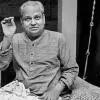
Raag Bhairav is a studio recording of the Hindustani classical raag Bhairav performed by vocalist Kumar Gandharva. Released in an unspecified year, the track spans 24 minutes and 17 seconds and exemplifies Gandharva’s interpretation of the early-morning raag, traditionally associated with the Bhairav thaat and rendered in the vilambit (slow) and madhya (medium) tempos.
The recording captures Gandharva’s distinctive vocal style, marked by intricate meend (glissando) and gamak (ornamentation), while adhering to the structural framework of Bhairav. The composition follows the khayal format, though specific bandish (lyrical composition) details, accompanying artists, and the release label remain undocumented in available sources. The performance emphasizes the shuddha dhaivat (natural sixth) and komal re (flattened second), characteristic of the raag’s melodic identity.
Kumar Gandharva (1924–1992) recorded extensively for labels such as HMV (His Master’s Voice) and Music Today, though the precise label and production context for this version of Raag Bhairav are unverified. The track stands as a representative example of his late-career work, where he refined traditional raag presentations with minimalistic accompaniment, often featuring tanpura drone and tabla percussion. No commercial album or compilation explicitly lists this recording, suggesting it may originate from a private session, archival release, or radio broadcast.
The absence of metadata on recording date, session musicians, or original medium limits further classification. Scholars and archivists frequently cite Gandharva’s renditions of Bhairav for their emotional depth and technical precision, though this specific performance lacks broader discographic annotation. The duration indicates an elaborate alaap (unmetered prelude) followed by a jor (rhythmic development) and jhala (fast-paced climax), typical of his concert-style recordings.