Malkauns Gandharva Gaan
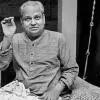
About Malkauns Gandharva Gaan
Malkauns Gandharva Gaan is a 1970s recording of dhrupad-ang khayal in the raga Malkauns by Kumar Gandharva. The performance spans 25 minutes and 18 seconds and exemplifies Gandharva’s reinterpretation of traditional Hindustani vocal forms. The artist integrates elements of dhrupad’s sustained, meditative phrasing with the improvisational flexibility of khayal, a hallmark of his Gandharva Gaan style.
The recording captures a live or studio session, though the exact date and venue remain undocumented. Gandharva accompanies his vocal with sparse tanpura drone, emphasizing the raga’s pentatonic (audav-jati) structure centered on the komal ni (flattened seventh). The composition omits instrumental accompaniment beyond the drone, directing focus to the vocal exploration of alap, jor, and jhala sections. The rendition concludes with a bandish (fixed composition) in vilambit ektaal (slow 12-beat cycle), followed by a faster drut section.
Kumar Gandharva (1924–1992) developed Gandharva Gaan as a synthesis of classical rigor and folk melodic simplicity. This recording reflects his later phase, where he prioritized emotional immediacy over technical virtuosity. The label and original release format (LP, cassette, or private circulation) are unverified, but the work circulates among archival collections of his performances. Notable tracks or alternate takes from the session, if any, remain uncataloged in public sources.
The raga Malkauns in this interpretation avoids ornamental embellishments, instead emphasizing deep, resonant mandra saptak (lower octave) phrases. Gandharva’s use of meend (glissando) and gamak (oscillation) in the madhyama (fourth) and dhaivata (sixth) notes distinguishes the performance. The recording’s audio quality varies across surviving copies, with some versions exhibiting ambient reverb suggestive of a concert hall or open-air setting.
Scholars cite this rendition as an example of Gandharva’s departure from the Gwalior and Jaipur-Atrauli gharanas, his foundational training grounds. The work’s reception in its time is poorly documented, though later critics highlight its influence on non-traditional approaches to raga presentation. No commercial reissues or remastered editions are confirmed as of 2024.