
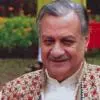
About Raga Bhairav
Raga Bhairav is a studio recording of North Indian classical music performed by vocalist Vijay Kichlu. The release centers on Raga Bhairav, a morning raga in the Bhairav thaat traditionally associated with devotion and introspection. Kichlu presents the raga in the khayal style of the Indore gharana, a school known for its emphasis on intricate taan patterns and systematic development of melodic phrases.
Kichlu recorded the album in a single continuous performance divided into three movements. The release opens with Alap, an unmetered improvisation that explores the raga’s ascending and descending scales, its vadi (dominant note) Dha, and samvadi (subdominant note) Re. The second track, Jor, introduces a subtle pulse while maintaining the raga’s contemplative mood through rhythmic phrasing and gradual acceleration. The final track, Vilambit Bandish in Tintal, establishes a fixed composition in slow tempo (vilambit laya) set to the 16-beat tintal cycle. Kichlu’s rendition includes elaborate bol-banao and taan sequences that expand the raga’s emotional range.
The recording was issued on January 1, 1994 in CD format. The label and production details remain undocumented in available sources. The album contains three tracks with a total runtime not specified in public records. Kichlu accompanies himself on tanpura for drone support, while the tabla accompanist’s name is not listed in the release metadata. The recording captures the artist’s approach to Raga Bhairav through a structured progression from alap to jor and finally the composed bandish, adhering to the classical gayaki (vocal) tradition.
Vijay Kichlu (1930–2005) was a disciple of Amir Khan, the founder of the Indore gharana, and later served as a professor of music at the University of Delhi. His interpretations of Raga Bhairav and other morning ragas were noted for their adherence to shuddha (pure) intonation and the gharana’s characteristic badhat (development) techniques. This release forms part of his recorded legacy in Hindustani classical vocal music, though its distribution scope and reception history are not widely documented.