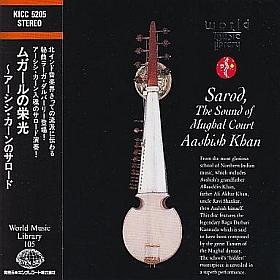
About Mugāru no Eikō ~ Āshin Kān no Sārodo
ムガールの栄光~アーシン・カーンのサロード (transliterated: Mugāru no Eikō ~ Āshin Kān no Sārodo) is a studio album by Indian classical musician Aashish Khan, released on February 3, 1996. The album features Khan as the primary artist performing on the sarod, a lute-like string instrument central to Hindustani classical music. The release marks one of Khan’s recorded works under the Japanese label SEVEN SEAS, catering to audiences in Japan and international listeners of Indian classical traditions.
The album adopts a CD format and comprises three tracks, each centered on distinct rāgas (melodic frameworks in Indian classical music). The opening track, ラーガ:ダルバーリー・カーンナラー:アラープ (Rāga Darbārī Kānnadā: Ālāp), presents the ālāp, an unmetered improvisational section that explores the raga’s melodic contours. The second track, ラーガ:ダルバーリー・カーンナラー:ガット (Rāga Darbārī Kānnadā: Gat), introduces a composed theme (gat) accompanied by rhythmic cycles, showcasing Khan’s technical command and expressive phrasing. The final track, ラーガ:ミシュラ・バイラヴィ (Rāga Mishra Bhairavī), shifts to a morning raga known for its meditative and expansive character.
The recording emphasizes Khan’s lineage as a seventh-generation musician of the Seniya-Maihar gharana, a school of Hindustani classical music founded by his grandfather, Allauddin Khan. While specific session details such as accompanying artists or recording locations remain undocumented in available sources, the album aligns with Khan’s broader discography in preserving traditional sarod repertoire. The 1996 release date coincides with a period of cross-cultural exchange, as Japanese labels actively produced and distributed Indian classical music during the late 20th century.
Critically, the album serves as a documented performance of Khan’s interpretation of Darbārī Kānnadā and Mishra Bhairavī, two ragas with deep historical roots in the Mughal court tradition. The absence of additional metadata, such as producer credits or mastering engineers, limits further technical or collaborative context. The work remains a representative example of Khan’s recorded output during the mid-1990s, contributing to the global dissemination of Hindustani instrumental music.