 Release Group
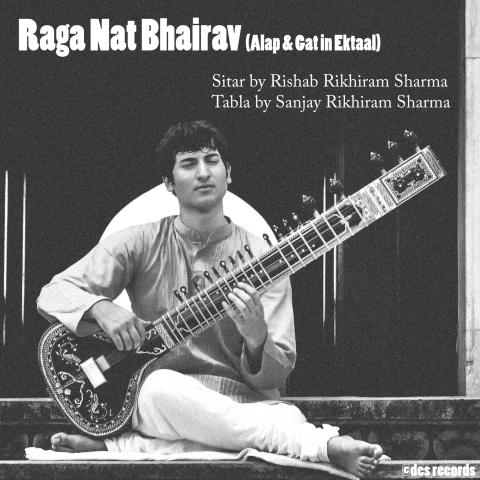
Raga Nat Bhairav (Birthday Recital by Rishab Rikhiram)

Recent Releases
View allTracklist (Primary Release)
About Raga Nat Bhairav (Birthday Recital by Rishab Rikhiram)
Raga Nat Bhairav (Birthday Recital by Rishab Rikhiram) is a single release by sitarist Rishab Rikhiram Sharma. The recording captures a live performance centered on Raga Nat Bhairav, a morning raga derived from the Bhairav thaat in Hindustani classical music. Sharma presented the recital on his birthday, and the release documents the event in a studio or concert setting.
Sharma released the recording on September 24, 2020. The primary format is a digital single distributed under Sharma’s independent label or personal imprint, though the exact label name remains unconfirmed in available sources. The release comprises two tracks that follow the traditional structure of a raga exposition: an alap (unmetered improvisation) and a gat (composed theme) set in Ektal, a 12-beat rhythmic cycle.
The first track, Raga Nat Bhairav: Alap (Introduction), features Sharma’s elaboration of the raga’s melodic framework. He explores the ascending and descending phrases characteristic of Nat Bhairav, emphasizing the komal re (flattened second) and komal dha (flattened sixth) while maintaining the raga’s contemplative mood. The second track, Raga Nat Bhairav: Gat in Ektal, introduces a fixed composition accompanied by rhythmic percussion, likely tabla. Sharma develops the theme through improvisational variations, adhering to the cyclic structure of Ektal.
The release serves as a documented performance within Sharma’s discography, highlighting his interpretation of Nat Bhairav. Further details about collaborating artists, recording location, or production personnel are not specified in the available context. The work aligns with Sharma’s broader output as a practitioner of the gayaki ang (vocal-style) sitar tradition, though specific lineage influences for this recording remain unstated.