 Release Group
Recent Releases
View allTracklist (Primary Release)
About Music of India
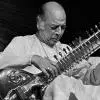
Music of India is a 1962 Indian classical music album by sitar maestro Vilayat Khan. The release features four instrumental tracks that showcase the artist's interpretation of Hindustani classical ragas and rhythmic compositions. The album was produced under the broader category of Music of India, though no specific record label is documented for this release.
Vilayat Khan performs all tracks on the sitar, accompanied by tabla in select compositions. The album opens with Raga "Miya Ki Malhar," a monsoon-season raga attributed to the legendary musician Miyan Tansen. This rendition highlights Khan's signature gayaki ang, an approach that emulates vocal techniques on the sitar. The second track, "Tabla Solo In Tin-Tal," shifts focus to percussive artistry, featuring a solo performance in the 16-beat rhythmic cycle of tin-tal. The tabla player for this track is not credited in available sources.
The third track, Raga "Miya Ki Todi," presents another morning raga associated with Tansen. Vilayat Khan's execution emphasizes the raga's meditative and introspective qualities, employing meend (glissando) and gamak (ornamentation) characteristic of his style. The album concludes with "Piloo (Thumree)," a light classical piece in the thumri genre. This track demonstrates Khan's versatility, blending classical rigor with the emotive, semi-classical thumri form.
The 1962 release captures Vilayat Khan's technical precision and improvisational depth during a period when he was establishing himself as a leading exponent of the Imdadkhani gharana. The album's tracklist reflects the artist's preference for blending traditional ragas with lighter classical forms, a hallmark of his musical approach. Further details about recording locations, producers, or additional personnel are not available in documented sources.