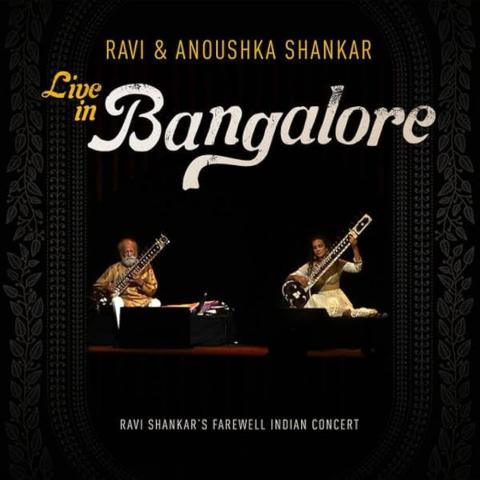
 Release Group
Live in Bangalore


Recent Releases
View allTracklist (Primary Release)
About Live in Bangalore
Live in Bangalore is a live album by sitarist and composer Anoushka Shankar, released on January 1, 2015. The recording captures a solo performance in Bangalore, India, showcasing Shankar’s interpretation of classical Hindustani raga traditions. The album features four tracks that blend instrumental virtuosity with spoken commentary on raga structures.
The primary release, titled Live In Bangalore, presents a concert recording without additional studio production. The tracklist includes Raga Yaman Kalyan, a morning raga known for its expansive melodic development, and Raga Tilak Shyam, a composition associated with the evening hours. The third track, Ravi Shankar Explains The Evening’s Khamaj, incorporates archival audio of Anoushka’s father, sitar maestro Ravi Shankar, describing the theoretical framework of Raga Khamaj. The album concludes with Khamaj And Medley, a performance that merges the raga with a medley of folk and classical themes.
The release format consists of a digital and physical edition, though the specific label remains undocumented in available sources. The concert emphasizes Shankar’s role as both a performer and an interpreter of her father’s musical legacy, with the inclusion of his explanatory segment serving as an educational bridge for listeners. The album’s structure reflects a typical Hindustani classical recital, progressing from slower, introspective alaap sections to faster rhythmic jhala passages.
Critical context for the recording is limited, as no accompanying liner notes or official press materials detail the venue, exact date of the performance, or collaborating artists. The work aligns with Shankar’s broader discography, which often explores the intersection of traditional raga and contemporary presentation. The track durations and precise instrumentation beyond the sitar are not specified in public records.